

A Daffodil Group perspective on CPHI & PMEC India 2026
Long before a medicine reaches a pharmacy shelf, its quality is being shaped in places most people never see.
In the sourcing of raw materials. In the precision of a manufacturing process. In the laboratory where an ingredient is tested. And in the countless checks that ensure one batch performs as reliably as the last.
These are the quieter parts of pharmaceutical manufacturing. Yet they are becoming increasingly important to the future of an industry that India has helped build on a global scale.
For decades, India has earned its reputation as the world’s pharmacy. Today, as the industry looks towards CPHI & PMEC India 2026, a larger conversation is taking shape.
The question is no longer only how much India can manufacture. It is how much more value, innovation, and confidence Indian manufacturing can bring to the world. |
India’s Next Chapter Goes Beyond Numbers
India’s contribution to global healthcare is difficult to overstate.
According to the Government of India’s Department of Pharmaceuticals Annual Report 2025–26, the country is the world’s third-largest pharmaceutical industry by volume and the eleventh-largest by value. India also accounts for approximately 20% of the global supply of generic medicines.
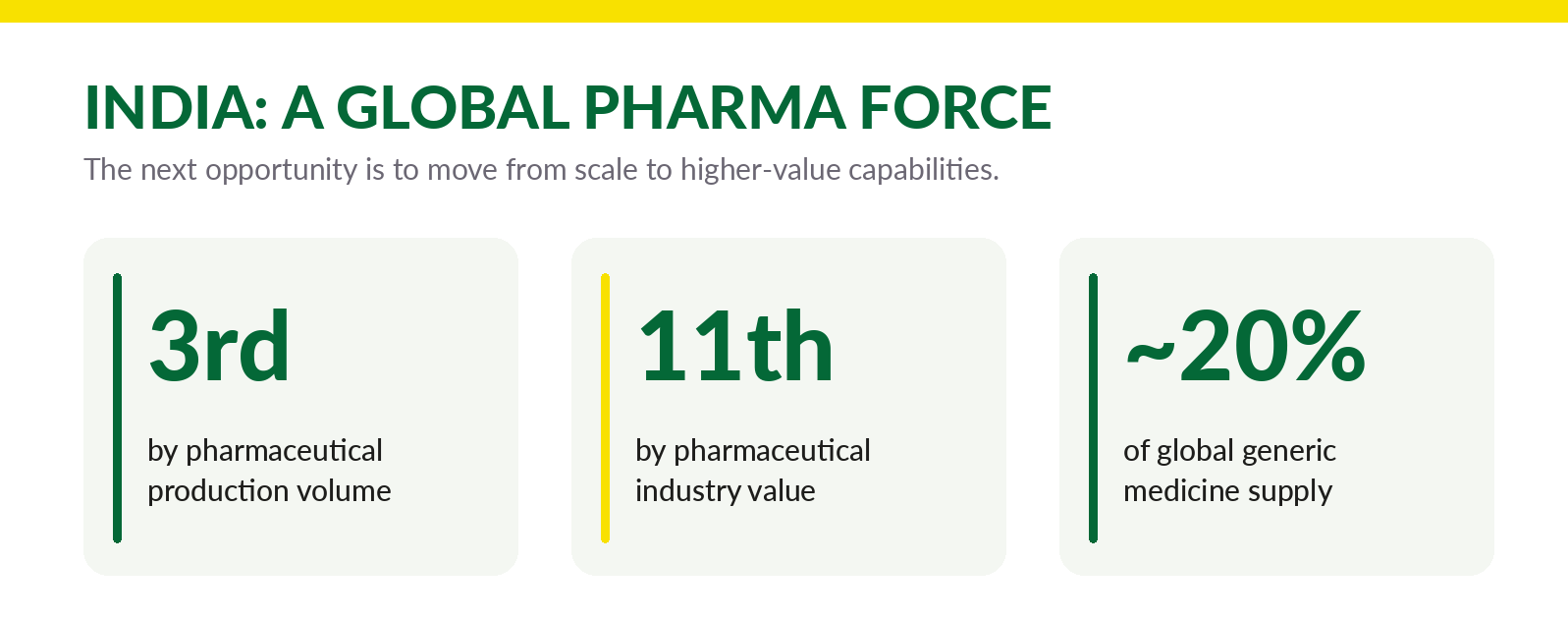
These numbers reflect decades of manufacturing expertise, industrial investment and the ability to make essential medicines accessible across markets.
But the difference between India’s position by volume and by value also points towards an important opportunity.
The industry’s next phase of growth will increasingly depend on its ability to move further into specialised products, advanced formulations, efficient manufacturing technologies and internationally competitive quality standards.
It will also require stronger domestic ingredient ecosystems and greater resilience against disruptions in global sourcing.
Manufacturing scale has given India a place in the global pharmaceutical industry. The challenge now is to strengthen that position through deeper capabilities.
CPHI & PMEC India 2026: A Reflection of an Evolving Industry
This changing outlook is visible in the direction of CPHI & PMEC India 2026.
Held from 23 to 26 November across two venues in Delhi NCR, the event is adopting a more specialised format. CPHI India (23–25 November, Yashobhoomi, New Delhi) will focus on pharmaceutical ingredients, APIs, excipients and formulations. PMEC India (24–26 November, IEML, Greater Noida) will bring manufacturing technology, equipment, automation and packaging into sharper focus.
The distinction is meaningful.
It recognises that the future of pharmaceutical manufacturing depends equally on what goes into a product and how that product is made.
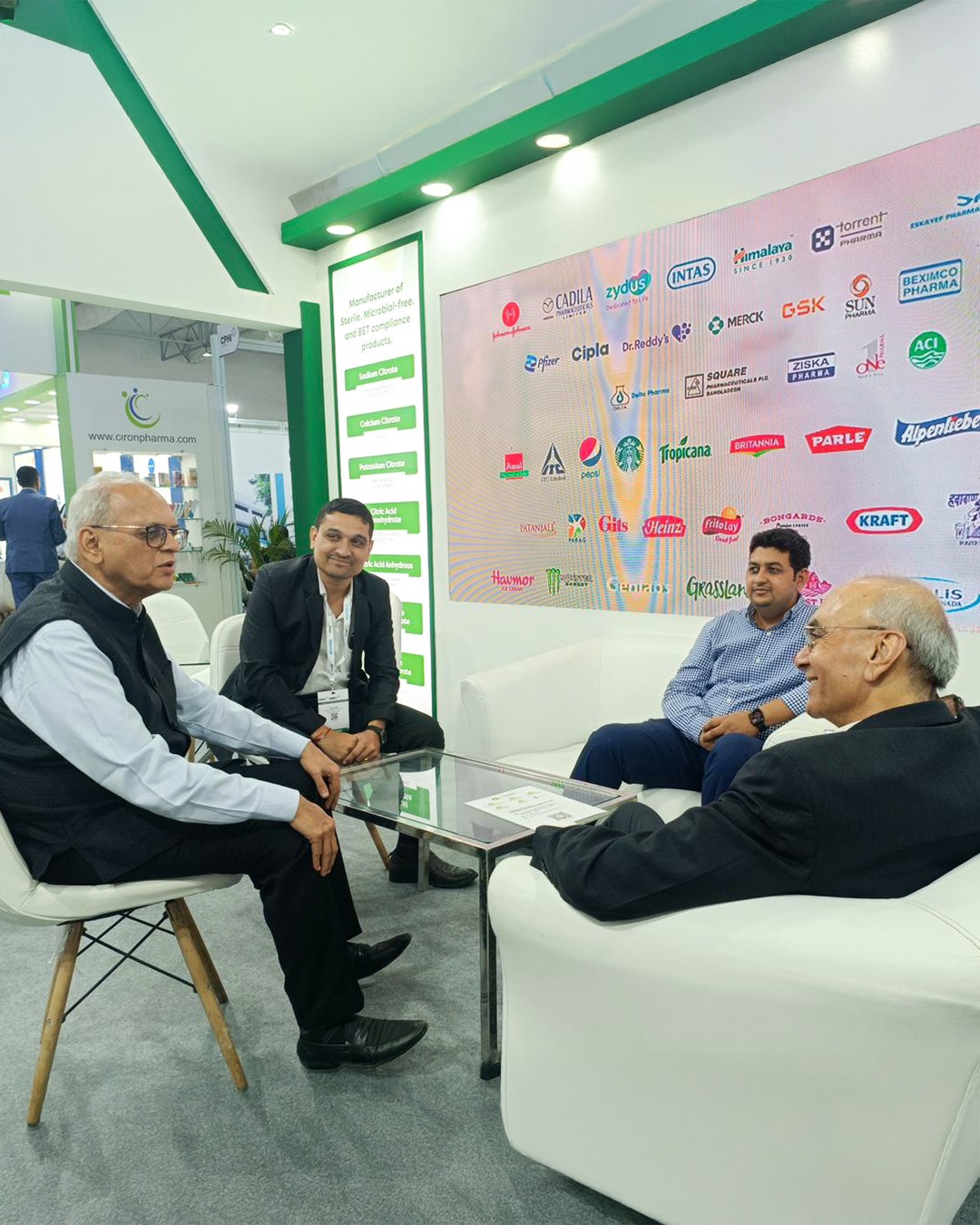
The published 2026 Pharma Connect Congress agenda highlights several critical questions. How can India strengthen API self-reliance? What will ensure the long-term competitiveness of its excipient industry? How can AI and digital technologies improve manufacturing? And how can sustainability become an advantage rather than simply a compliance requirement?
These discussions extend beyond technology or policy alone. They speak to the responsibilities of every participant in the pharmaceutical value chain, including ingredient manufacturers whose work forms the foundation of finished formulations.
For companies operating in this space, the direction is clear. Global competitiveness increasingly demands stronger quality systems, dependable sourcing, process innovation and meaningful investment in responsible manufacturing.
Why the Ingredient Matters More Than Ever
Much of the public conversation around pharmaceuticals focuses on finished medicines and their active ingredients. Yet the supporting ingredients deserve equal attention.

Pharmaceutical excipients influence formulation properties such as stability, consistency, manufacturability and drug delivery. Citrate-based ingredients, for instance, serve different functions across pharmaceutical applications, including pH regulation and buffering, depending on the formulation.
Their effectiveness depends on precise specifications, appropriate purity and consistent manufacturing.
This responsibility has become increasingly important as pharmaceutical supply chains grow more complex and regulatory expectations continue to evolve.
The World Health Organization’s 2025 guidance on good manufacturing practices for pharmaceutical excipients reinforces the importance of quality management throughout production, control, storage and distribution.
It is an important reminder that ingredient quality cannot be treated as an isolated laboratory result. It must be built into the manufacturing process and maintained throughout the supply chain.
For pharmaceutical manufacturers sourcing across countries and continents, such consistency is fundamental to choosing reliable ingredient partners.
And for India’s ingredient manufacturing industry, it represents an opportunity to establish leadership through technical expertise and proven quality systems.
Daffodil Group: Building Confidence at the Ingredient Level
At Daffodil Group, this perspective has shaped a manufacturing journey spanning more than three decades.
Beginning in 1994 with a single pharmaceutical product, Daffodil Pharmachem has grown into a manufacturer of citrate ingredients, pharmaceutical excipients and specialty chemicals, supplying customers across more than 25 countries.
Today, its manufacturing facility spans over 500,000 sq. ft., with production capacity exceeding 80 metric tonnes of high-purity citrate ingredients daily.
But capacity is only one part of the story.
SCADA-controlled manufacturing systems, in-house chemical and microbiological testing, and established quality processes help maintain consistency across production. The company’s WHO-GMP-certified facility reflects its focus on manufacturing discipline and international quality requirements.
Across the wider Daffodil Group, activities in product testing, pharmaceutical formulation research and ingredient development further support an approach that connects manufacturing expertise with evolving industry needs.
These capabilities are particularly relevant as global customers place greater emphasis on supplier evaluation, product traceability, documentation and reliable long-term partnerships.
For Daffodil, the opportunity lies in continuing to strengthen these foundations while responding to the changing expectations of the industries it serves.



 English